Tag Archives: cooking

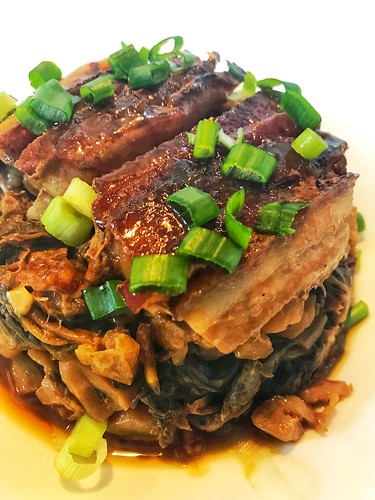
Pork With Salted Vegetables 梅菜扣肉 ( Mei Cai Kou Rou)

This is the first time for me to try this dish. Main ingredients for this dish are Mei Cai and pork belly.

Mei Cai is a kind of preserved vegetable. I bought from local supermarket. There is a lot of salt on the surface of Mei Cai. I need to rinse salt off first. Then soak in water. Change water several times till water becomes clean. Drain the vegetable. Squeeze all the water out and chop them.

For the pork part, better choose pork belly in square shape. It will be easier to cut it into thin slices. I only find the rectangle kind. It really takes me some time to cut it.

1. Put pork belly in a pot. Add in enough water. Drizzle a little cooking wine, add in ginger slices and star anise. Turn on the heat. Cook for 15-20 mins or till chopsticks can easily go through the meat.

2. Put the pork belly into a plate. Use toothpick to poke several times on the pork skin.

3. Add in 1 tablespoon dark soy sauce, spread soy sauce all over the pork by hand. Then set it aside. Let the skin dry up.

4. Heat some oil in the pan. Turn to low heat. Put pork in with the skin side down. Be careful. You can put on the lid in order not to get hurt by the hot oil. Fry till the skin turns dark brown. For 3-5 mins.

5. Take the pork out and cut into thin slices. About 8mm-1 cm, I think. I’m really terrible at cutting skills, so my pork are in uneven thickness.

6. In a bowl, mix 1 tablespoon dark soy sauce, 1 tablespoon light soy sauce, 1/2 tablespoon sugar and 2 tsp white pepper powder. Marinate pork slices in mixed sauce for a little while.

7. Heat a little oil in the pan. Add in chopped Mei Cai. Stir fry till aromatic. Pour in the marinade of pork. Simmer with low heat for 3-5 mins.

8. Place pork slices in a bowl, skin side down. Top with all the Mei Cai and sauce in the pan after stir-fry. Press with spatula to flatten the surface.

9. Cover the bowl with aluminum foil. Place on steaming rack. And steam in hot water for 40-60 mins.

10. Pour the Meat gravy into sauce pan. Turn on low heat. Add in a little starch water. Stir till thickened.

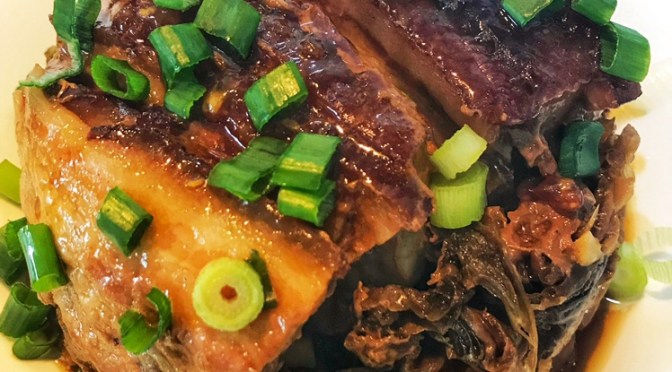
11. Put a plate over bowl. Flip upside down. And you will see the pretty pork on top and surrounded by Mei Cai. Drizzle thickened gravy. Garnish with chopped spring onion.

Pork & Green Chili Stir-fry

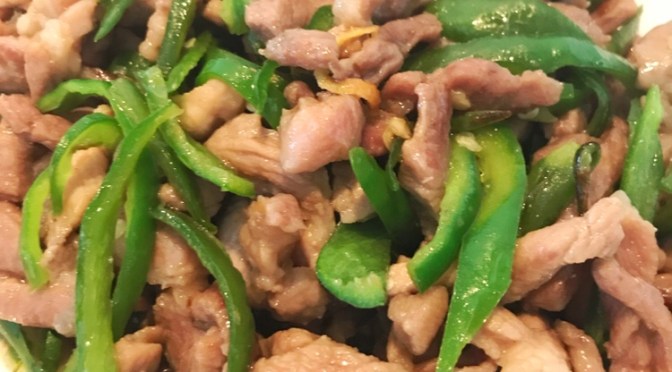
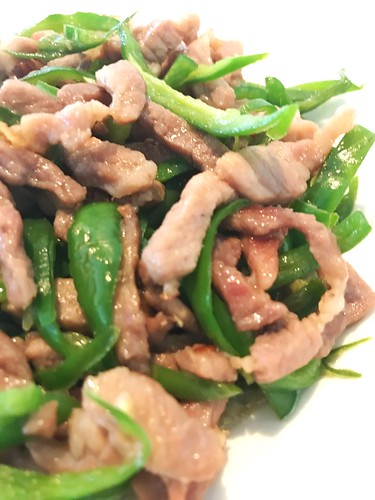
青椒肉丝 (pork & green chili stir-fry) is one of the most commonly-seen dishes in China. And it’s also very popular in Japan. When I have a bad appetite (which rarely happens) or feel like eating something spicy, this dish always comes to my mind immediately. Everyone has his own pork & green chili stir-fry recipe. And here is how I cook it:

1. Cut pork and green chili into shreds. A sharp knife will do a better job. Pork containing a bit fat is ideal for this dish. Otherwise, the meat will be very dry.

2. Heat oil in the pan. Use middle heat. When oil is hot, add in pork. Quick stir to separate each shred. Also add in a little ginger. Fry till pork turns a little brownish and shiny with the grease.

3. Add in chili. Quickly mix chili with pork. Stir fry till chili’s aroma comes out.

4. Add in a little light soy sauce and sugar. My husband can’t accept too much spiciness. So I added a little sugar.

5. Season with salt. And serve hot.

Steamed Greasy Grouper

1. Sprinkle salt evenly over and inside the grouper.

2. Place several ginger slices in a plate. Then put the grouper over them.

3. Put several tofu pieces in the plate too. It’s optional, if you don’t like tofu, just skip this step.

4. In a small bowl, add in 1 tablespoon cooking wine and 2 tsp oyster sauce. Mix well then pour the sauce over fish.

5. Put plate with fish on steaming rack. In hot water and steam for 12 mins. My grouper is a small one. More time will be needed if the fish is bigger.

6. Take the plate out after steaming. Sprinkle ginger and spring onion shreds over fish.

7. Heat a pan. Add in 1 tablespoon oil and 1 tablespoon sesame oil. When the oil is very very hot, pour it over the ginger, spring onion and the fish. Enjoy the sizzling.

Hong Tang Ba Ba

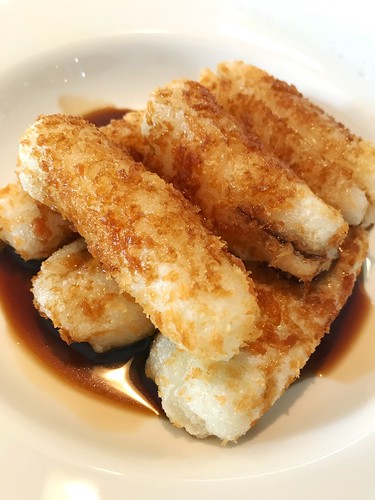
It’s a sweet Chinese snack in Southwestern China area, I think. Hong Tang means brown sugar in Chinese. Ba Ba refers to cake made from glutinous rice flour.

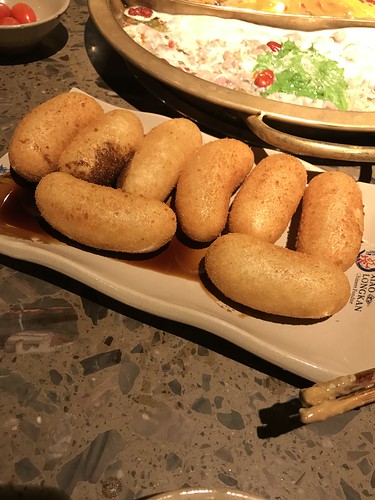
This summer holiday when my husband and I were in China. My friends there treated us Xiao Long kan hotpot. One dish is Hong tang baba. And their Hong Tang Ba Ba is very different. Outside skin is very crispy. Both of us loved them.

Here is the one we had in summer:

Like small balloons. Really really nice.

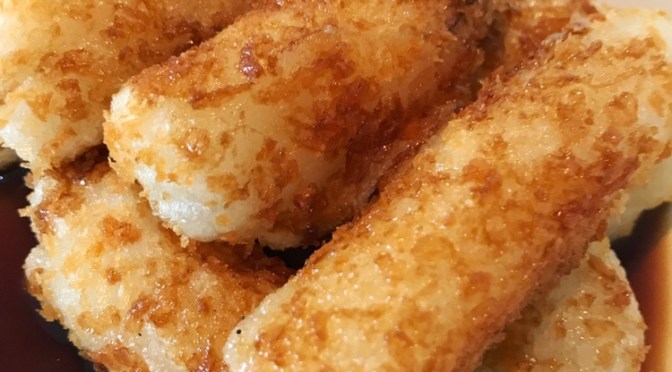
I tried to make this dish in my way.

1. Mix glutinous rice powder with water. To make a dough.

2. Divide dough into smaller ones. Make them into the shape you like.

3. Dip small doughs in water. Then roll in bread crumbs.

4. Deep fry them with low heat till golden brown. Air in Glutinous rice dough will burst out. So be careful when frying.

5. Add 2 tablespoon water and 1 tablespoon brown sugar in saucepan. Heat to condense the sauce.

Serve hot with brown sugar sauce.

Mine are not even close to the ones we had. But my husband still loved my ones.

I really can’t figure out how Xiao Long Kan Hotpot made such wonderful shape of Hong Tang Ba Ba. If anyone knows, please tell me. 🙂 thanks!

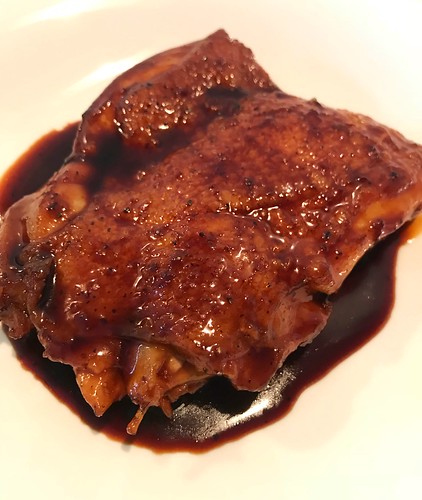
Teriyaki Chicken Leg

1. Prepare a whole boneless chicken leg. Sprinkle a little salt and black pepper.

2. Use the back of knife to hit chicken a bit.

3. Heat a pan on stove. When the pan is hot, put the chicken inside with skin side down. Flip over when the skin turns golden brown. Fry the other side till brown, too.

4. If there is much oil after sear, you can pour the oil out.

5. Add in 1 tablespoon light soy sauce, 1/2 tablespoon dark soy sauce, 1 tbsp sugar and 1 tablespoon honey. Let the chicken be coated with sauce.

6. Pour in hot water just enough to cover the chicken. Cover the lid and simmer for a while.

7. Remove the lid. Turn to high heat to reduce the sauce.

Yummy.

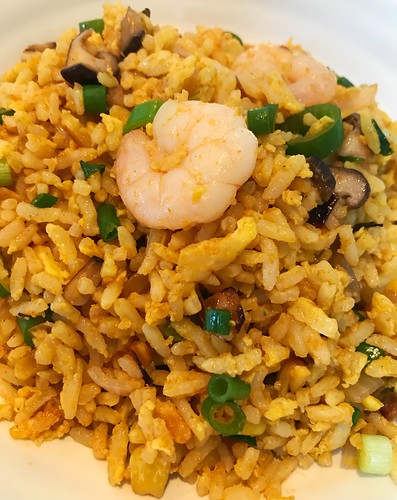
Curry Fried Rice

Ingredients:

A bowl of Leftover rice

Vegetables you like ( I chose corn, shiitake, onion)

Shrimps

Eggs 2

Salt

Oil

Curry powder

Chopped spring onion

1. Beat two eggs in a large bowl. Add rice into eggs and mix them well to let each rice grain be coated with egg.

2. Heat some oil in the pan. Put rice in. Stir fry till golden brown and eggs are cooked. Set them aside for later use.

3. Fry shrimps till cooked.

4. Heat oil again. Stir fry vegetables together. My order is onion in first, then shiitake and corn at last.

5. Put all the rice and shrimps into vegetables. Stir fry evenly.

6. Sprinkle 1-2 tablespoon curry powder. If you want it to be more pungent, you can add more. Garnish with chopped spring onion.

It actually tastes very good.

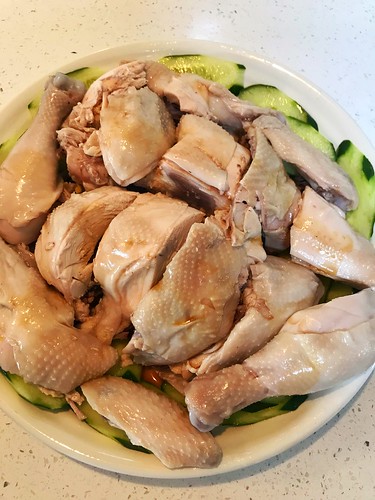
Chopped Cold Chicken

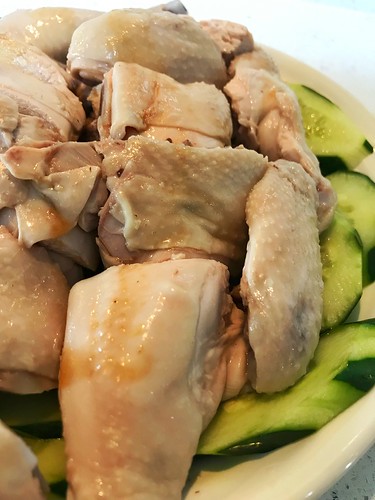
Chopped Cold Chicken (白斩鸡)is a popular dish in Guangdong cuisine.

I used this cooking method: (original recipe is Chinese)

https://www.xiachufang.com/recipe/102925373/

1. Prepare a very big pot. Big enough for a whole chicken.

2. Add in enough water that can cover whole chicken. Also add in cooking wine, star anise, chopped ginger and spring onion.

3. Bring the water to boil. Grab the chicken. Soak it in hot water and pull it out immediately. Do this in-and-out procedure 3 times.

4. Then put whole chicken into pot. Boil for 1 min.

5. Soak the chicken into cold water to make the skin more elastic.

6. Put chicken into pot and boil for 4 mins.

7. Put the lid on and boil for 1 min.

8. Turn off the stove. Don’t move anything. Keep the lid on. Don’t even touch it. Let the chicken have a good spa for 40 mins. If you want your chicken to be more tender, you can use less time. But that may means you will see blood in the chicken bone. I like to play the safe card. So I let the chicken be there for 40 mins. And by the way, my chicken is around 800g. Bigger chicken needs more time.

9. After a good sauna. Chicken will feel hot. Put it into icy cold water immediately.

10. Brush sesame oil onto it.

Cut it. Don’t throw the chicken soup away. It’s ideal to make other soup or to boil dumplings/ wantons.

Drizzle light soy sauce.

And EAT!

Spring Onion Noodles

Another popular dish in China. Very simple to cook. All you need are spring onion, oil, noodles, light soy sauce, dark soy sauce and sugar.

1. Cut spring (4-6 stalks or more) into small strips around 3-5 cm.

2. Heat 1-2 tablespoon oil in the pan.

3. Add in chopped spring onion. Fry with low heat till spring onion turns dark brown in color. If you don’t like the black spring onion, you can take them out before the next step.

4. In a small bowl, mix 2 tablespoon light soy sauce, 1 tablespoon dark soy sauce and 1/2 tablespoon sugar.

5. Pour the sauce into pan. Stir till sugar melts.

6. Turn off the heat. Let the sauce cool down and blend in cooked noodles. Blend them well.

You can make more sauce and save in the refrigerator for later use.

My husband tried it and loved it.

Homemade Sweet Plum Drink

There is an idiom about plum in Chinese:

望梅止渴: Quenching Thirst by Watching Plums

Chinese

有一年夏天,曹操率领部队去讨伐张绣,天气热得出奇,骄阳似火,天上一丝云彩也没有,部队在弯弯曲曲的山道上行走,两边密密的树木和被阳光晒得滚烫的山石,让人透不过气来。到了中午时分,士兵的衣服都湿透了,行军的速度也慢下来,有几个体弱的士兵竟晕倒在路边。

曹操看行军的速度越来越慢,担心贻误战机,心里很是着急。可是,眼下几万人马连水都喝不上,又怎么能加快速度呢?他立刻叫来向导,悄悄问他:“这附近可有水源?”向导摇摇头说:“泉水在山谷的那一边,要绕道过去还有很远的路程。”曹操想了一下说,“不行,时间来不及。”他看了看前边的树林,沉思了一会儿,对向导说:“你什么也别说,我来想办法。”他知道此刻即使下命令要求部队加快速度也无济于事。脑筋一转,办法来了,他一夹马肚子,快速赶到队伍前面,用马鞭指着前方说:“士兵们,我知道前面有一大片梅林,那里的梅子又大又好吃,我们快点赶路,绕过这个山丘就到梅林了!”士兵们一听,仿佛已经吃到嘴里,精神大振,步伐不由得加快了许多。

故事出自《世说新语·假谲》。成语“望梅止渴”,比喻用空想安慰自己或他人。

English

Cao Cao of the Three Kingdoms period (220-265) was not only a capable politician in managing state affairs, but also a strategist good at leading troops in going to war.

One summer, Cao Cao was leading his troops in a punitive expedition against Zhang Xiu. It was extraordinarily hot. The burning sun was like a fire, and the sky was cloudless. The soldiers were walking on the winding mountain paths. The dense forest and the hot rocks exposed to the sun on both sides of the paths made the soldiers feel suffocated. By noontime the soldiers’ clothes were wet through with sweat, and the marching speed slowed down. Some solders of weak physique even fainted on the roadside.

Seeing that the marching speed was slower and slower, Cao Cao was very worried because he feared that he might bungle the chance of winning the battle. But how could they quicken their speed? Cao Cao at once callde the guide and asked him on the quiet whether there was a source of water nearby. The guide shook his head, saying that the spring water was on the other side of the mountain, which was very far to have to make a detour to reach. Cao Cao realized that time didn’t permit them to make such a detour. After thinking for a moment, he said to the guide, “Keep quiet. I’ll find a way out.” He knew that it would be to no avail to order his troops to quicken the steps. He had a brain wave and found a good solution. He spurred his horse and came to the head of the column. Pointing his horsewhip to the front, Cao Cao said, “Soldiers, I know there is a big forest of plums ahead. The plums there are both big and delicious. let’s hurry along, and we will reach the forest of plums after bypassing this hill.” When the solders heard this, they immediately slobbered. Picturing in their minds the sweet and sour flavour of the plums, the soldiers felt as if they were actually eating the plums, the soldiers felt as if they were actually eating the plums themselves. The morale greatly boosted, the soldiers quickened their steps a great deal automatically.

This story comes from “The Fake Tangery” in Anecdotes of This World by Liu Yiqing of the Southern Dynasties period (420-589). From this story, people have derived the set phrase “quenching thirst by watching plums” to refer to trying to comfort oneself of others by idle dreams.

https://www.chinese-tools.com/forum/read.html?q=17%2C6432

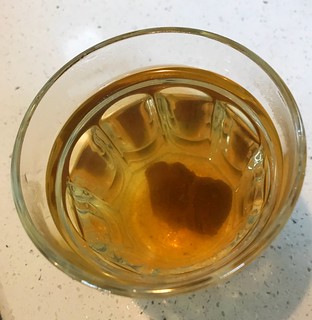
Plum drink is very popular in China, especially in hot summer. The dried plum I used were bought in store. And the salesgirl there recommend this type. But I forgot the name. 🙂

Dried plum 35g

Dried Oranger peel 5g

Rock sugar cubes 130g (you can reduce the sugar if you want it to be less sweet)

Put dried plum and orange peel in a big bowl. Rinse them under water. Then pour the dirty water out. Put them in another clean bowl. Add in 1 L cold water and soak for 30 mins.

Pour plum, orange peel and water into a pot. Also add in another 1L water. Turn to high heat. Bring boil. Then turn to low heat. And simmer for 40mins – 1 hr.

Turn off the heat. Add in sugar. Stir till all sugar dissolved.

Discard all the plum and orange peels, just leave the water.

You can drink while it’s hot. But if you let it cool down and put into refrigerator. You will find it more delicious. My husband is a big fan.

Perfect for hot and dry summer.

Fried Leek Dumplings

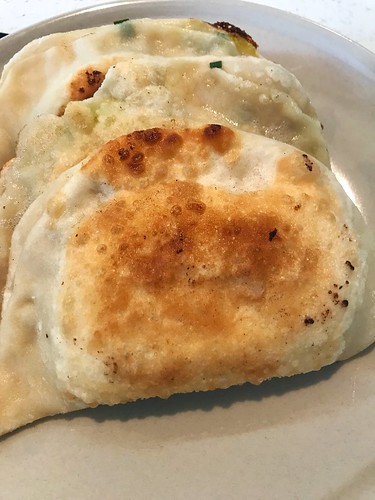
韭菜盒子 is a very popular snack in China. 韭菜 (jiu cai) means leek. 盒子 (he Zi) means box. I think it refers to the Dumplings’ shape.

It’s a quite easy dish to cook. Wrap is made from normal flour and water. Fillings maybe various. Most common combination is leek with egg. (You can also add in dried shrimps, or cooked vermicelli). My mom can make very nice fried leek dumplings. So I asked her about how to make the fillings. And she told me just in one sentence: half egg is raw and the other half is cooked. When my mom teaches me about cooking, her answer is always simplified and short, which is very very different from the mom I know in daily life. :p

I just followed my mom’s instruction. I fried one egg in pan. Then put it in chopped leek with another raw egg. Mix them very well. Season with salt, black pepper, 2 tsp cooked oil and 2 tsp sesame oil. Blend all filling ingredients well.

Divide dough into smaller ones. Just like making normal dumpling’s wrap by rolling pin. But this wrap should be thicker. Place one spoonful filling in the middle. Fold one end to the other. Press with finger.

Fry in low heat till bother sides turn golden brown.